


Energy • Movement • Balance
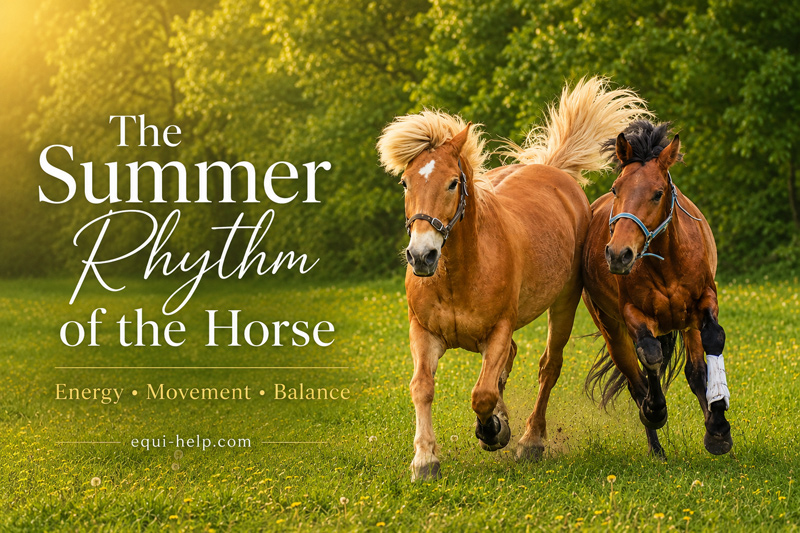
By summer, the awakening of spring is complete.
The horse is no longer emerging into the season—they are living fully within it.
Fields have grown tall. Daily routines are more active. Time outdoors stretches longer, and movement becomes a natural part of each day.
With this increased activity comes a different kind of challenge: maintaining balance between effort and recovery.
Because summer is not only a season of energy. It is a season of endurance, adaptation, and rhythm.
Whether your horse spends the summer trail riding, preparing for competitions, traveling to shows, attending clinics, enjoying longer training sessions, or simply spending more time at pasture with herd mates, their body is constantly responding to movement and changing environmental demands.
Every trailer ride, every unfamiliar arena, every new trail, and every increase in physical activity asks the horse to adapt. Muscles work harder, joints absorb repeated forces, ligaments and tendons provide stability, while the fascia continuously responds to patterns of movement, helping the entire body work as one connected system.
The fascia, often described as the body’s connective network, plays a particularly important role during this season. More than simply connecting structures, it helps distribute force, support efficient movement, and communicate throughout the body. As physical demands increase, restrictions or imbalances within this system may become more noticeable.
Sometimes these changes appear as obvious stiffness or reduced performance.
More often, they reveal themselves in subtle ways.
A shorter stride. Difficulty bending in one direction. A reluctance to engage the hindquarters. Changes in posture, attitude, or willingness to work.
The horse is always communicating. The question is whether we take the time to notice.
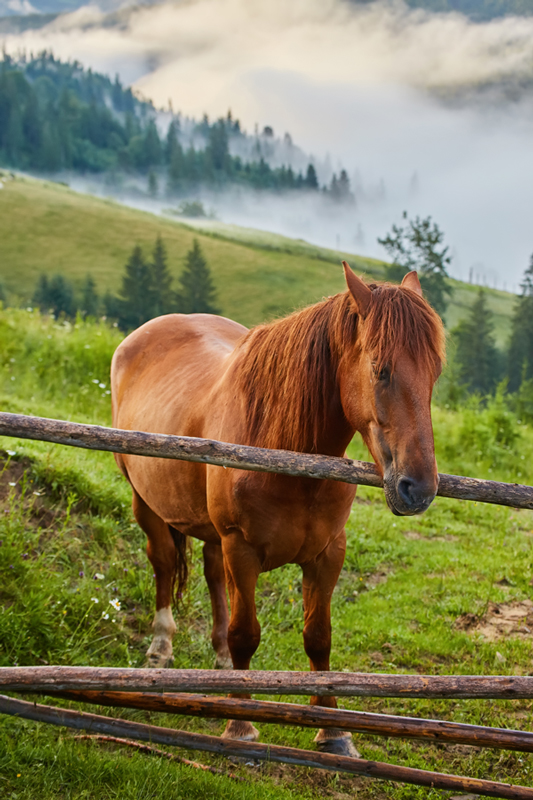
Summer also brings its own unique demands. Longer rides, more frequent training sessions, competitions, clinics, trail adventures, and travel in horse trailers often become part of the season. Heat, humidity, insects, changing routines, and unfamiliar environments can all add physical and emotional stress.
Even horses that appear strong, fit, and eager to work are continuously adapting. Every new experience requires the body and nervous system to respond, recover, and find balance once again. During these busy months, thoughtful support can make a meaningful difference in helping your horse stay comfortable, resilient, and ready for whatever the season brings.
This is why recovery becomes just as important as exercise. Work creates adaptation. Recovery allows that adaptation to happen.
Periods of movement need periods of rest. Effort needs restoration. Activity needs balance.
This is where Equine Bodywork can become a valuable part of your horse’s summer wellness routine. By releasing muscular tension, supporting healthy fascial mobility, improving joint flexibility, and encouraging nervous system regulation, bodywork helps the horse recover more efficiently and adapt to the increasing physical and environmental demands of the season.
Gentle aromatherapy may also provide additional support for relaxation, emotional balance, and overall well-being—especially for horses that are sensitive to travel, competitions, changing environments, or the heightened stimulation that summer often brings.
But perhaps the greatest gift of summer is the opportunity to slow down and truly observe. To watch your horse grazing peacefully in the evening light. To notice the rhythm of their breath after a ride. To feel the subtle conversations that happen through touch, movement, and presence.
Because the summer rhythm of the horse is not measured by miles ridden, ribbons earned, or hours spent training.
It is found in balance. The balance between movement and recovery. Between activity and rest. Between doing and simply being. And when we learn to move with that rhythm rather than against it, we create space for a season that supports not only performance—but lasting health, comfort, and well-being.
Because when we truly listen, the horse becomes the teacher – and the body becomes the language we learn to understand.